Credit Cards Explained for Beginners
Financial Guidance Disclaimer
This article provides educational information only and does not constitute financial advice. Financial decisions should be based on your personal circumstances.
You’ve probably heard two completely opposite messages about credit cards. One says they’re a trap that buries people in debt. The other says they’re a smart tool for building credit and earning free travel. Both are partly true, but neither explains what actually happens when you use a credit card—and that gap in understanding is where most problems begin.
A credit card isn’t free money. It isn’t a financial villain, either. It’s a short-term loan that can be remarkably useful when you treat it carefully and surprisingly expensive when you don’t. The goal here is to walk you through the mechanics, the risks, and the habits that separate people who use credit cards without drama from those who spend years climbing out of a balance.
What Is a Credit Card, Really?
A credit card lets you borrow money at the point of purchase. When you buy something, the card issuer pays the merchant on your behalf, then you repay the issuer later. You’re not spending your own cash at that moment—you’re using someone else’s money with a promise to pay it back.
That’s the fundamental difference from a debit card. With a debit card, the money leaves your bank account immediately. With a credit card, you create a debt you’ll need to settle, typically within a billing cycle, to avoid interest.
Behind every transaction are three parties: you, the merchant, and the card issuer (plus a payment network like Visa or Mastercard). The issuer pays the merchant, minus a small fee the merchant absorbs, and you then owe the issuer. [Source: CFPB – What Is a Credit Card?]
How Credit Cards Actually Work
When you open a credit card account, the issuer gives you a credit limit—the maximum amount you can borrow at one time. Each month, your purchases are grouped into a billing cycle. After the cycle closes, the issuer sends a statement showing your balance, a minimum payment, and a due date.
The statement balance is the total you owe for that cycle. The minimum payment is the smallest amount you must pay by the due date to keep the account in good standing—often 1% to 3% of the balance or a flat dollar amount, whichever is higher. [Source: CFPB – Credit Card Key Terms]
If you pay the full statement balance by the due date, most cards offer a grace period on purchases. During a grace period, you won’t owe any interest on those purchases. The CFPB notes that card issuers are generally not required to provide a grace period, but if they do, they must credit your payment on time and you must have paid your previous balance in full to keep it. [Source: CFPB – What Is a Grace Period?]
If you pay only part of the balance, the remaining amount rolls over to the next cycle—and that’s when interest starts accumulating.
Understanding Your Statement: A Walkthrough
A credit card statement can look intimidating, but it boils down to a few numbers. Knowing which one to focus on changes everything.
A billing cycle is usually about 30 days. At the end of that cycle, the issuer adds up all your purchases, fees, and any carried balance, then sends you a statement. The statement shows:
Statement balance: The total you owe for that billing cycle.
Current balance: The statement balance plus any charges you’ve made since the cycle closed. It could be higher if you’ve kept spending, or lower if you’ve already paid part.
Minimum payment: The smallest amount you must pay by the due date to avoid late fees and keep the account in good standing.
Available credit: Your credit limit minus your current balance—how much you can still borrow.
For a beginner trying to avoid interest, the statement balance is the number that matters. Pay that amount in full by the due date, and you won’t owe interest on purchases that appeared on that statement. You also don’t need to pay the current balance—just the amount from the closed cycle.
Here’s a concrete example:
Your card closes the month with a $700 statement balance. Your minimum payment is $25. If you pay the full $700 by the due date, you pay no purchase interest. If you pay only $25, the remaining $675 begins accumulating interest immediately, and future purchases may also start accruing interest with no grace period until you pay the full balance.
The minimum payment keeps your account current and protects you from late fees and negative credit reporting—but it does not stop interest. Paying only the minimum turns a short-term loan into a long-term, expensive debt. Focus on the statement balance, set a reminder for the due date, and aim to pay that number in full every single month.
The Beginner Mistake That Makes Credit Cards Expensive
Here’s where the loan becomes expensive. If you carry a balance beyond the grace period, the issuer charges interest on the unpaid amount, typically at a high annual percentage rate (APR). The average credit card APR in early 2026 hovered around 22% for accounts assessed interest. [Source: Federal Reserve – Consumer Credit G.19 Statistical Release]
Interest compounds daily. That means you’re paying interest on interest. Let’s say you charge $1,000 to a card with a 22% APR and stop using it. If you make only the minimum payment each month, calculated as 2% of the balance or $25, whichever is greater, it could take you roughly five years to pay off that $1,000, and you’d end up paying approximately $600 in total interest on top of the original amount. The purchase effectively costs you 60% more than the sticker price.
That’s not hyperbole. The CFPB’s pay-off calculator illustrates that making only minimum payments dramatically extends the repayment timeline and multiplies the cost. [Source: CFPB – Credit Card Payoff Calculator methodology]
Missing a payment entirely adds late fees—up to $41 for a second late payment within six billing cycles, per CFPB rules—and can trigger a penalty APR, often around 29.99%, which may apply to existing balances, not just new purchases. [Source: CFPB – Credit Card Late Fees]
Why Credit Card Companies Make Money
Card issuers profit from three main sources.
First, interest charges on balances that aren’t paid in full. This is often the largest revenue stream. Second, interchange fees: every time you swipe your card, the merchant pays a small percentage of the transaction to the card network and issuer. [Source: Federal Reserve – Payment Systems]
Third, fees charged directly to the cardholder: annual fees, late payment fees, cash advance fees, and balance transfer fees. Some cards carry no annual fee; others charge significant amounts in exchange for perks. The business model is not a secret—it’s designed to profit from both your spending activity and your borrowing behavior. You don’t need to be an expert, but knowing this can help you recognize that the incentives are not always aligned with yours.
How Credit Scores Connect to Credit Cards
A credit score is a numerical snapshot of how reliably you’ve repaid borrowed money. Using a credit card—and paying on time—can build a positive credit history. Misusing one can damage it.
Payment history makes up the largest factor in the widely used FICO scoring model. Paying at least the minimum on time, every month, is the single most important habit. Even one missed payment can stay on your credit report for seven years. [Source: CFPB – How Do I Get and Keep a Good Credit Score?]
Credit utilization is another key factor. This is the percentage of your total credit limit you’re using at any given time. If your card has a $1,000 limit and you have a $300 balance, your utilization is 30%. Keeping utilization below 30%—and ideally below 10%—can help your score, though the effect is based on the balance the issuer reports to credit bureaus, which is often your statement balance. [Source: Experian – What Is a Credit Utilization Rate?]
Length of credit history, the mix of credit accounts, and recent applications for credit also matter. Each new card application usually triggers a hard inquiry, which can temporarily lower your score by a few points. [Source: Equifax – Understanding Hard Inquiries on Your Credit Report]
Credit Cards vs. Debit Cards
A debit card pulls money you already have from your checking account. A credit card lets you borrow and repay. Each has distinct advantages and risks.
Fraud protection: Legally, your liability for unauthorized credit card charges is capped at $50 under federal law, and most major networks offer zero-liability policies. Debit cards also have protections, but if you don’t report the fraud within two business days, your liability rises to $500; after 60 days, you could be liable for the full amount. [Source: FTC – Lost or Stolen Credit, ATM, and Debit Cards] Practically, credit card fraud doesn’t empty your checking account. Debit card fraud can drain it, leaving you without cash while the bank investigates.
Credit building: Debit card usage doesn’t appear on your credit report. Credit cards, used responsibly, help you build a credit history. If you never plan to borrow for a car or a home, that may not matter. But many landlords, insurers, and even some employers check credit history, so it can influence your life beyond borrowing.
Spending behavior: Debit cards limit you to money you already have, which can be a guardrail against overspending. Credit cards introduce the possibility of spending future money, which can feel like flexibility but can become a slow leak if you’re not watching.
The Benefits of Credit Cards (Without the Hype)
Credit cards offer real utility when you stay out of debt.
Fraud protection is the strongest benefit. If a thief racks up charges, you’re not out the cash while disputing them. That peace of mind is worth a lot.
Rewards programs can return a percentage of your spending. Cash back cards might offer 1.5% to 2% on everything, or higher rates in rotating categories. That can mean a few hundred dollars a year for a household that pays every bill through the card and never carries a balance. But the money comes from interchange fees and the interest paid by other cardholders—it’s not a gift; it’s a rebate of a fee someone else paid.
Purchase protections, including extended warranties and price protection, are offered by many cards. These can save you money if something breaks or if a price drops shortly after purchase. Travel cards often include trip cancellation insurance and rental car collision coverage.
The ability to build credit is arguably the most valuable benefit for a beginner. A consistent payment history and low utilization can open the door to lower interest rates on mortgages and auto loans later.
None of these benefits matter if you’re paying 22% interest.
Credit Card Security: Fraud, Phishing, and Account Protection
While liability protection covers you if a criminal uses your card, a bigger everyday threat is being tricked into giving away your own information. Many people worry about sophisticated hackers, but most scams succeed because someone creates urgency and exploits trust.
Common threats include:
Phishing emails pretending to be your card issuer, asking you to “verify” your account by clicking a link.
Fake customer support numbers that appear in search results, run by scammers ready to collect your card details.
Text-message scams that claim a suspicious transaction requires immediate confirmation.
Card skimming devices at gas pumps or ATMs that steal your card data when you swipe.
Malware on your phone or computer that captures login credentials.
A message that says “Your account will be closed in 30 minutes—verify now” is designed to make you react before you think. Recognizing that emotional hook is half the defense.
Practical protection habits:
Never share one-time verification codes with anyone who calls or texts you, even if they claim to be from your bank.
Don’t click on links in emails or texts that claim to be from your issuer. Instead, open the official app or type the website address yourself.
Turn on transaction alerts so you receive a real-time notification every time your card is used. You’ll spot fraud instantly.
Freeze your card immediately through the app if it’s lost or misplaced; you can unfreeze it just as easily if you find it.
Review statements regularly—not just the balance, but each transaction.
Use a unique, strong password for your credit card account and enable multi-factor authentication.
The FTC points out that fraud losses from payment app and phishing scams often happen because the victim unwittingly handed over account access. [Source: FTC – How to Spot, Avoid, and Report Phishing Scams] Your own caution is as important as any bank’s security system. When in doubt, hang up, don’t click, and call the number on the back of your card directly.
The Risks of Credit Cards (Without Fearmongering)
The biggest risk is simple: you spend more than you can repay in full. Credit cards make that easy.
Overspending is the norm, not the exception. Studies have found that consumers tend to spend more when using credit cards than when using cash, because the payment feels less tangible. [Source: Federal Reserve Bank of Boston – Payment Methods and Consumer Spending] The purchase doesn’t immediately reduce your bank balance, so the psychological pain is muted.
Carrying debt is not a personal failing. But the math is unforgiving. A $2,000 balance at 22% APR, paid at $100 per month, would take about 25 months to clear and cost roughly $500 in interest. That’s $500 that can’t go toward rent, groceries, or savings.
The minimum payment illusion is particularly dangerous. Making the minimum looks responsible—you’re paying on time, after all—but it stretches the debt out and maximizes interest. Many people believe carrying a small balance helps their credit score. It doesn’t. Paying in full each month builds a positive payment history without generating interest, and there’s no scoring advantage to carrying a balance month-to-month. [Source: Experian – Does Carrying a Balance Help Your Credit Score?]
Reward chasing—spending more to hit a bonus threshold or earn points—can quickly erase any reward value. A 2% cash back card loses all its appeal if you’re paying 22% interest on purchases you wouldn’t have made otherwise.
What Happens After You Miss a Payment? A Timeline
Missing a payment doesn’t make you a financial failure, but it sets off a chain of events that gets more serious the longer it goes unresolved. Understanding the sequence helps you act quickly rather than freeze.
Day 1 after the due date
Your payment is officially late. The issuer will usually charge a late fee—often $30 to $41, depending on whether it’s a repeat occurrence. [Source: CFPB – Credit Card Late Fees] If you pay within a few days, some issuers may waive the fee as a courtesy if you call and ask.
Around 30 days past due
If the payment is still unpaid, the issuer may report the missed payment to the credit bureaus. This is when your credit score can take a significant hit. A single 30-day late notice can drop a good score by dozens of points. [Source: CFPB – What Is a Late Payment and How Does It Affect My Credit?]
60 or more days past due
The issuer may apply a penalty APR—often significantly higher than the standard rate—to your existing balance and new purchases. Additional late fees can accumulate, and collection calls may begin. At 90 days, the account may be charged off as a loss, though you still owe the money.
Long-term consequences
Late payments can remain on your credit report for seven years, though their impact fades over time if you re-establish a pattern of on-time payments. Future lenders may view missed payments as elevated risk, affecting your ability to get a mortgage, a car loan, or even an apartment rental.
The important thing to know: a missed payment is a mistake you can recover from. If you slip, pay what you can immediately and call your issuer. Often, they can work with you on a payment plan before the damage escalates. A single late payment does not define your financial life—but learning from it matters.
The Psychology of Credit Card Spending
Credit cards change how we spend because they separate the act of buying from the act of paying. Research on payment decoupling shows that when you don’t feel the immediate loss, you’re likely to spend more freely. [Source: Journal of Consumer Research – Payment Mechanism and Consumption Behavior]
Frictionless payments amplify this. One-click checkout, saved card details, and mobile wallets make transactions almost subconscious. You might not notice a $4 coffee adding up to $80 a month. It’s not that you’re reckless; it’s that the system is designed to minimize the moment you reconsider.
Social pressure and lifestyle inflation can also creep in. When friends pull out metal cards or talk about travel points, it’s easy to want the same. But the person posting about their free flight might also be carrying a five-figure balance at a promotional rate. The point is: you can’t see the debt side of someone else’s credit card story.
How to Use a Credit Card Responsibly
The habits that keep credit cards useful are simple but require consistency.
Pay your statement balance in full every month. Set up autopay for the full balance if you have a buffer in your checking account; if you’re worried about overdraft, at least set it for the minimum and manually pay the rest before the due date.
Monitor your spending weekly, not monthly. Log into the app once a week and check the running total. This replaces the end-of-month shock with a real-time awareness that keeps you in line.
Treat the card like a debit card. If you don’t have the cash in your checking account right now to cover the purchase, don’t make it. This one rule eliminates almost all credit card trouble.
Keep your utilization low. Even if you pay in full, the issuer may report your statement balance to the credit bureaus. If you’re approaching a high utilization ratio, consider making an early payment before the statement closes to lower the reported balance. This is a tactical move for credit scoring, not a necessity, but it can be helpful when you’re planning a major credit application.
Avoid cash advances. Cash advances usually incur a fee and start accruing interest immediately, with no grace period. [Source: CFPB – Credit Card Cash Advances]
How to Choose Your First Credit Card
Beginners typically face a chicken-and-egg problem: you need a credit history to get approved for many cards, but you can’t build history without a card. The solution is to start with options designed for no or low credit history.
Secured credit cards require a refundable security deposit, often $200 to $500, which becomes your credit limit. They report to the credit bureaus and function like a standard credit card. After several months of on-time payments, many issuers graduate you to an unsecured card and return your deposit.
Student credit cards are unsecured cards designed for enrolled college students. They tend to have lower credit limits and simpler rewards structures, and they offer a starting point for building credit.
Starter unsecured cards for people with limited history may have lower limits and higher APRs, but they can serve the same purpose: a tool to build payment history.
Avoid applying for multiple cards at once. Each application triggers a hard inquiry, and multiple inquiries in a short period can signal risk to lenders. Pick one, use it lightly, and pay it off.
Two Hypothetical Case Studies
Case Study 1: The Cautious Beginner
Luis, a recent graduate, gets a secured credit card with a $300 limit. He uses it only for his phone bill and one grocery run each month, never exceeding $90. He sets up autopay for the full statement balance. After six months, he sees his credit score start to appear. After a year, the issuer returns his deposit and converts his card to an unsecured account. Luis applies for a no-annual-fee cash back card, is approved, and keeps both cards open to lengthen his credit history. He never pays a penny in interest.
Case Study 2: The Minimum Payment Trap
Priya opens a starter card with a $1,000 limit and a 24% APR. Over a few months, she charges $900 for moving expenses. Money is tight, so she pays the minimum—around $25—each month and doesn’t add new purchases. After a year, she has paid about $300, but her balance has only dropped by about $100 because of interest. Discouraged, she continues paying the minimum for two more years. Eventually, she increases her payments when her income rises. By the time she clears the debt, she has paid roughly $700 in interest on the original $900, and the card was unusable for emergencies because she was always near the limit. She wishes she had treated the card like cash from day one.
Neither story is dramatic. But they illustrate the difference between using a credit card as a temporary loan you repay immediately and using it as a long-term borrowing tool by accident.
When a Credit Card Should NOT Be Your Priority
A credit card is not a solution for every financial situation.
If you’re already struggling with high-interest debt, adding another credit card usually makes the problem worse. Focus on stabilizing your income and paying down existing balances before opening new accounts.
If your income is unstable—freelance work with unpredictable pay, for example—a credit card can become a dangerous bridge. It’s tempting to rely on it during lean months, but that can lead to a balance you can’t repay when money arrives.
If you struggle to cover basic expenses and don’t yet have a budget that works, a credit card can mask the problem rather than solve it. The ability to pay later doesn’t change the fact that you’re spending more than you earn.
This doesn’t mean you should never get a credit card if you face these challenges. It means you should get the basics—a small emergency fund, a realistic spending plan, and some traction on existing debts—in place first.
Frequently Asked Questions
Do credit cards build credit automatically?
No. They build credit only when you pay on time and keep your utilization manageable. Simply having a card doesn’t improve your score.
Should I close an old card I don’t use?
Closing a card reduces your total available credit, which can increase your utilization ratio, and eventually shortens your average account age. Both can lower your score. If there’s no annual fee, keeping it open with occasional small purchases may be better for your credit.
What happens if I miss a payment?
You’ll owe a late fee, and if you’re more than 30 days late, the missed payment can be reported to credit bureaus, lowering your score. The late payment can stay on your credit report for seven years. A single missed payment doesn’t ruin you, but it’s a signal to lenders.
Is carrying a small balance good for my credit score?
No. This is a persistent myth. Paying your full balance each month demonstrates responsible credit use without generating interest, and your payment history is still reported positively.
How many credit cards should a beginner have?
One is plenty. Start with a single card, use it modestly, and develop the habit of paying in full. You can add more later if you have a clear reason.
Why is APR so high?
Credit card debt is unsecured—there’s no collateral the lender can seize if you default. High rates compensate for that risk. Borrowers who pay in full each month avoid these rates entirely.
Can I use a credit card abroad?
Many cards work internationally, but some charge foreign transaction fees of 1% to 3%. If you travel, look for a card that doesn’t charge these fees. Always pay in local currency to avoid dynamic currency conversion markups.
Beginner Credit Card Checklist
Before applying for your first card, run through these questions:
☐ Do I have a stable income that lets me pay for my regular expenses without borrowing?
☐ Do I understand the difference between a statement balance, a minimum payment, and a due date?
☐ Have I read the card’s fee schedule—annual fee, late fee, foreign transaction fee, cash advance fee?
☐ Do I know the APR for purchases, and that it only applies if I carry a balance?
☐ Am I prepared to set up account alerts or autopay so I never miss a payment?
☐ Can I commit to treating this card like a debit card—spending only money I already have?
☐ Do I know my credit limit, and will I keep my spending well below it?
☐ If it’s a secured card, do I have the deposit money saved and not needed for immediate expenses?
Conclusion
A credit card isn’t inherently good or bad—it’s simply a tool that amplifies your financial habits. When you understand how the billing cycle works, focus on the statement balance, and treat the card like cash in your pocket, it can quietly build credit and offer useful protections. When you ignore the mechanics, pay only the minimum, or assume future income will cover today’s spending, the same tool can become expensive quickly.
The best credit card users are not the ones who borrow the most or maximize every rewards point. They’re the ones who never forget what a credit card actually is: a short-term loan with the power to make life easier when respected, and much harder when misunderstood. If you walk away with one rule, make it this—never spend money you don’t already have, and always pay the statement balance in full. The rest is just details.
Recommended Articles

Best Ways to Improve Credit Score in America
A rigorous, data-driven analysis of the behaviors that actually improve your credit score — and why the U.S. credit system rewards payment reliability, low utilization, and time. No hacks, no myths, just the mechanics that move the number.
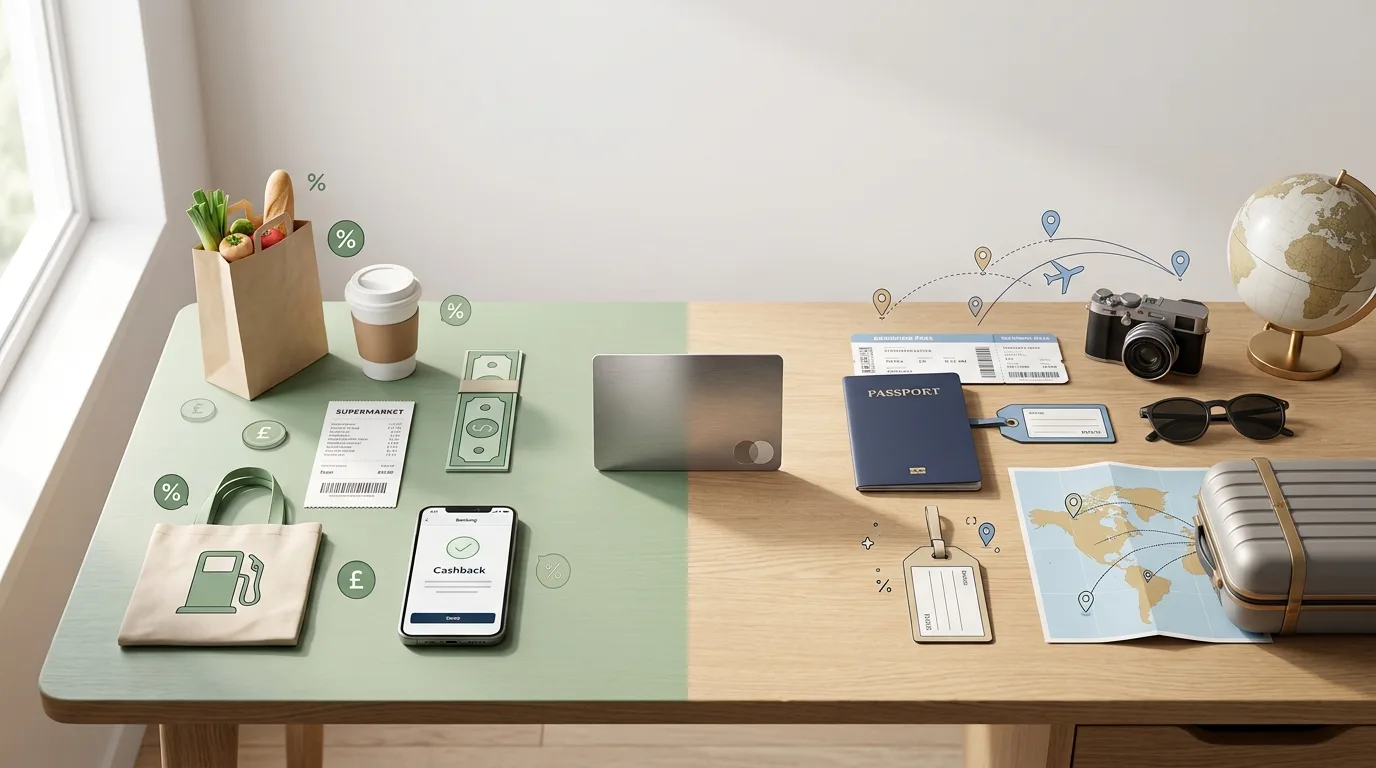
Cash Back vs Travel Rewards Cards: A Beginner’s Guide to Choosing the Right Rewards Credit Card
Compare cash back and travel rewards cards. Learn how each works, their pros and cons, annual fees, point valuations, and how to choose the right card based on your spending habits and travel style.